Recently, I attended an event where postdocs from several academic institutions came to the company for a day of seminars, lab tours, and a networking lunch. I was one of the hosts for the computational science table.
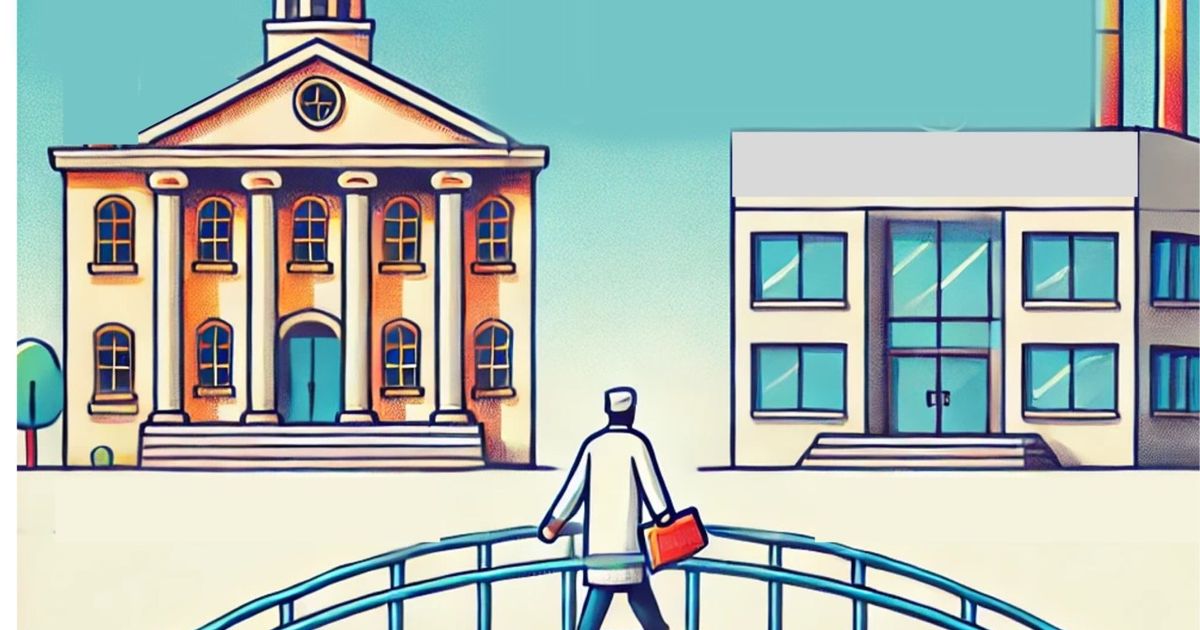
After exchanging pleasantries, questions started flowing. It is indeed a difficult period for academic postdocs who would like to try out industry, even harder for people who need sponsorships. However, I did see a glimmer of hope, as there are so many skills and opportunities around them that can perhaps help them make the transition, when they can actually discover them. I’m sharing three examples where I hope I helped them see a path forward.
“A” was a bit confused, uncertain where she would fit in. She was an immunologist at the bench, and recently switched to data curation for immune assays across institutions and fields. She needs to make sure that results can be entered into a large database with a predefined ontology. She’s no longer doing experiments and not sure if industry needs her data curation skills learned from work rather than from an academic program. I asked her, do you know how the data are used downstream? I was a bit surprised she didn’t, since those standardized data can have so many applications downstream, like meta-analysis and even AI agents that can traverse the entire database and offer previously impossible insights. So I suggested that she reach out to colleagues using the data to learn more, and express interest for getting involved. With her immunology expertise, she can ask and answer questions that others without her background cannot. Once she learns more about how to use the data, even some coding with the help of AI, she would fit the bill for a translational scientist or even data scientist within a therapeutic area. More likely than not, she has the environment to learn, and she seems just one step away from various industry opportunities.
“B” is a pure computational biologist analyzing multi-omic data. She sometimes has trouble understanding technical terms discussed by bench scientists during lab meetings, such as the design of yeast display libraries for antibody discovery. I suggested that she directly reach out to her colleagues working in the lab on this exact topic. Of course, she needs to prepare in advance by reading foundational papers for this technology, so she can ask specific questions. By doing so, she can demonstrate two things: 1) she wants to understand the experimental design and is willing to get involved earlier on, rather than waiting for the data to be delivered to her to analyze, only to find out that insufficient data quality or replicates hinders the ability to get a clear answer, which can be avoided if she participates in experimental design; 2) she shows that she’s willing to communicate with the bench scientists in their language, and offers analytical help whenever they need it, a win-win situation here. In an academic lab, dry and wet lab scientists are typically right around one another, unlike in the industry where the teams doing dry and wet lab work can be at two different sites. It’s a golden opportunity and invaluable resource right at their fingertips, yet one that most graduate students fail to recognize or take advantage of.
We then only had ten minutes left, and “C” introduced herself. She designed an entire bioinformatic pipeline for processing epitope sequencing data (can’t quite recall the details), and switched to a hybrid bench scientist who does experiments and analyzes the data at the same time. This is such a rare career transition - I’ve only seen people transition from wet lab to dry, almost never the other way around. She said she enjoys it because she gets to design her own experiments that test hypotheses she generates from in silico analysis. I encouraged her to keep going, and keep up with her communication skills, because she can speak two different languages and serve as the perfect bridge between the bench and computer, a unique advantage. She will be an asset wherever she goes.
I truly enjoy learning about individual journeys and trying to help a talent fulfill their best potential. If you’d like to chat, please reach out, would love to help!
Transition from academia to industry - a tale of many tales
You might be just one step away from industry opportunities
Oct 23, 20265 min read