
If you're an MS or PhD student planning to graduate in 2027 and move into industry, you may be wondering:
When should I start preparing and applying for industry jobs?
My answer to the specific question of when to start applying is around 2–3 months before graduation. But my experience has taught me that preparing for the job hunt should start much earlier.
One thing I'm particularly glad I did was reach out to people already working in industry. My mentor was one of those people, and his first-hand perspective on hiring helped me understand the process from the other side of the table. Looking back, I wish I had started having those conversations much sooner.
The goal isn't to start submitting applications six months before graduation. It's to use that time to learn about industry careers, build relationships, and prepare yourself—so that when the right opportunity comes along, you're ready to apply.
Here's how I would think about the timeline if you're graduating in 2027.
6+ Months Before Graduation: Start Preparing
If you're graduating in May 2027, I would start preparing for your industry job search by around November 2026—or earlier.
This doesn't necessarily mean submitting dozens of applications.
Instead, focus on:
Identifying the types of industry roles that fit your background
Researching companies and teams
Updating your resume and LinkedIn profile
Talking with industry scientists and alumni
Attending conferences and career events
Learning what skills companies are actually looking for
This is also a good time to start networking. You don't need to ask someone for a referral or a job. Talk with people about their work, how they made the transition from academia, and what they would recommend to someone in your position.
Your job search starts before your applications do.
3–6 Months Before Graduation: Start Applying
For a May 2027 graduate, this could mean starting targeted applications around November 2026 to February 2027, depending on the position and expected start date.
At this stage, I would prioritize quality over quantity.
Look for positions where:
Your technical background is relevant
Your degree and research background fit the requirements
Your expected availability makes sense for the position
You can clearly explain how your graduate research translates to the role
Don't stop networking once you start applying. Someone you spoke with months earlier may know about a newly opened position or give you useful context about a team before you apply.
1–3 Months Before Graduation: Increase Your Application Activity
As graduation gets closer, I would become more active with applications.
By this point, you should have a better understanding of:
What types of roles you want
Which companies are hiring
How to position your research experience
What questions you're likely to encounter in interviews
When you can realistically start working
As graduation gets closer, I would become more active with applications and focus heavily on interview preparation. By this point, you should have a clear understanding of your target roles, how to position your research experience, and when you can realistically start working.
What If Your Dream Job Opens Earlier?
Don't take the 2–3 month recommendation too literally.
Suppose you graduate in May 2027 and find your dream Scientist position in September 2026. Should you wait until December or January to apply?
Not necessarily.
If the company needs someone to start immediately, you may not be a realistic candidate yet. But if the position is designed for an upcoming graduate or the hiring team has flexibility around the start date, it may still be worth applying.
Read the job posting in the context of the company's hiring need.
What About International Students?
If you're an international student on an F-1 visa, timing deserves additional attention. You also need to consider your work authorization, OPT timeline, and other immigration requirements.
Start planning early and work closely with your university's international student office to understand your specific OPT timeline and how it affects your job search.
The career-planning lesson is simple:
Don't leave your job search until the last minute when you have additional work authorization constraints.
A Simple Timeline for May 2027 Graduates
If you want a simple framework, here's what I would use:
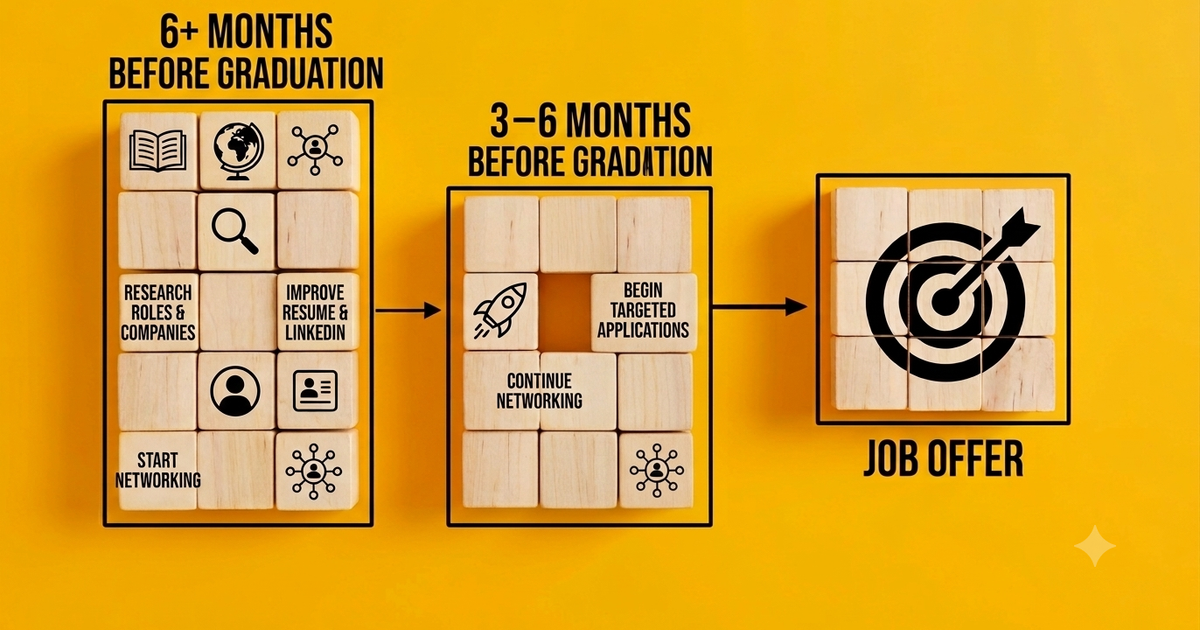
6+ months before graduation: Research roles and companies, improve your resume and LinkedIn, and start networking
3–6 months before graduation: Begin targeted applications and continue networking
1–3 months before graduation: Increase application activity and prepare seriously for interviews
Near graduation: Continue applying and interviewing; don't assume you've missed your opportunity
Think of this as a framework, not a deadline.
The Two Dates That Matter Most
After working in biotech for five years, I don't think there is one magic number of months before graduation when every graduate student should start applying.
Instead, ask yourself two questions:
1. When will I realistically be available to start?
2. When does this particular company need someone to start?
The closer those two dates are, the better your timing is likely to be.
So if you're graduating in 2027, don't wait until the last couple of months to start thinking about your industry career.
Start preparing and networking early. Begin targeted applications several months before your expected availability, and adjust your strategy based on the company and position.
A job search is a process, not a single application deadline.
If you're not sure what industry roles fit your background or how to prepare for the transition, Cocha connects graduate students and early-career professionals with people already working in industry.
You don't have to figure out the transition alone.